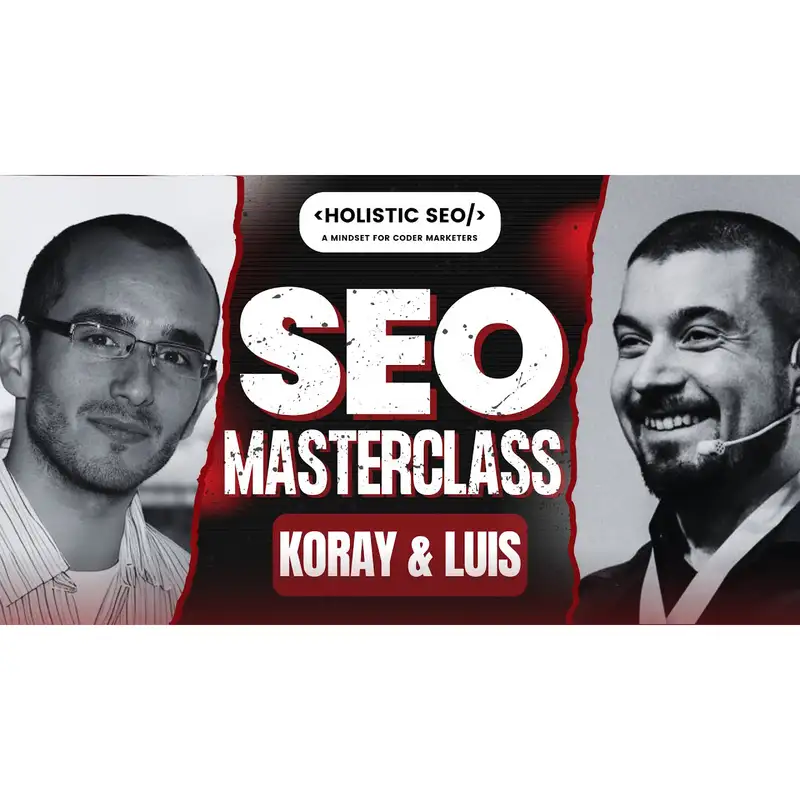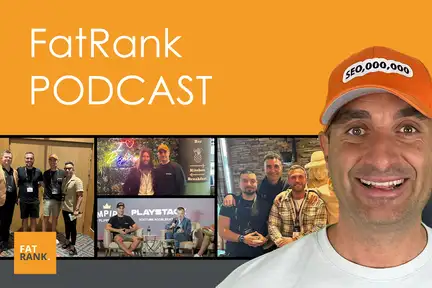
Semantic SEO Success Stories Between Luis Salazar Jurado and Koray Tuğberk GÜBÜR
Download MP3In my previous response, I summarized and condensed the dialogue to create a readable script for the "Show Notes" format.
However, looking back at your initial instruction to "Keep all meaning fully intact" while only removing timestamps and fillers, the previous version was too brief. Below is the full, expanded Cleaned Transcript following your exact instructions: keeping every topic discussed (Malaga, the doctor/patient analogy, the "tractor" license plate test, and specific technical patents) while removing the "uhs," "you knows," and repetitions.
CLEANED TRANSCRIPT
Koray Tuğberk GÜBÜR: If you like to play the endless game which is SEO, if you like to do research, learn new things, and work in a niche where you're not going to get bored in any way, shape, or form because everything is constantly changing, SEO is definitely your spot. From my point of view, it is very fun because it is a puzzle that is constantly changing and you cannot finish it.
Hello everyone, welcome to another great SEO interview. This is actually the first of its type. In my YouTube channel usually, I share lots of blue-hat SEO case studies or holistic SEO studies, but I decided to start a success playlist. Luis Salazar Jurado is, I believe, the most successful Holistic SEO community member because he is the one who shared the first case studies besides me and the first results and successes repeatedly, not just one time. It also happened to me; in my first case study, I published four websites because I knew they would say it's luck, but when you publish four, they can't say luck anymore. Luis also did it multiple times by implementing our framework, the Koray framework, based on semantics and topical authority. At the same time, he trained and helped many people in our community without expecting anything in return. He is very willing to help and after this interview, you can reach out to him and ask questions about overall SEO. He is from Malaga in Spain, a very expensive place; before going there, just be sure that you have enough money. With that said, let's start. Luis, welcome.
Luis Salazar Jurado: Thank you very much for having me. My name is Luis Salazar Jurado. Basically, I am an SEO consultant who discovered semantic SEO around three and a half years ago through a random video in the right sidebar on YouTube. There was a guy that claimed he was going to launch a course in semantic SEO and I just went down that rabbit hole and started reading about semantic SEO and watching videos. After three years and a half, here we are doing this podcast.
Koray Tuğberk GÜBÜR: Life is very interesting. A person from Spain and a person from Turkey, then life brings them together. It happened actually by luck too. Pavel also said the same thing, he just saw it on YouTube and now we are with him as well. When you saw the course announcement or the videos, how did you decide to go for it? Many people at the beginning are a little bit skeptical. How was it for you?
Luis Salazar Jurado: In fact, the real kicker, the video that changed my point of view, was the testimonial you have with Pavel. There was a key sentence I will never forget: "When you don't understand a concept about the framework, don't move forward. Just stop, go back, and connect the dots between the terms you don't understand." It was a testimonial in a cafeteria in Istanbul. That was the first testimonial where Pavel shared how to connect the concepts and how to move forward. Meeting Pavel a year later, he shared with me all the notes and graphs he has about the framework itself, and it was very useful. That was the real moment that triggered my mind to focus heavily on semantic SEO.
Koray Tuğberk GÜBÜR: Pavel is one of the people who make really deep research. He created even a Figma map. I didn't share it yet with the community, but two years ago he created literally a kind of map. I didn't even know I had written so much stuff until I saw that Figma. I am glad you mentioned him, he is also part of this relationship with us. Another thing is you got really good results in these last three years and you regularly share them on LinkedIn. When you implement these things, do you think that sometimes clients get skeptical, or do they know they should be waiting for something? How do you handle writing, design, and development resources to implement this methodology for your own business?
Luis Salazar Jurado: It took me a while to communicate effectively the value of semantic SEO. It took two to three years to get great results in a client. My second oldest client is an insurance company in Madrid. After working with them for five years, I have a case study about this company where I shared the evolution of keywords in the top three, and it was amazing. They didn't know, but indirectly I was training the copywriters in semantic SEO. They got convinced when they saw the results. Basically, what I did was train the two copywriters and make them trust themselves in the testing and the proposals. Nowadays, I only give them the general idea and they do the rest. They really trust in the system and when they see the result, they can also go to their management and present new ideas.
Koray Tuğberk GÜBÜR: Ramanathan V. Guha is the person behind programmable search engine technology. What I do is usually report and create a short video sharing the benefits of implementing semantic SEO optimizations and how they can do it, but I don't give them direct orders. I say, "Hey guys, here is where we are, here is where we can be, and here is an opportunity." I tell them I trust their ability in copywriting. Strictly from an SEO point of view, I would do this, but I'm pretty sure you can find the right balance. Just changing one word, for instance, in insurance. There is a difference between provisional insurance for days or insurance for months. Grammatically it might sound the same, but the conditions are different. People search differently. This brand is heavily focused on cheap insurance, but "cheap" in English could have negative connotations. You can use terms like economic or affordable, but people search "low-cost insurance." When we spotted the opportunity that we were ranking for low-cost insurance and we didn't even have the word low-cost in our landing pages, I communicated that to them. I gave them the options and they implemented it themselves.
Luis Salazar Jurado: Exactly. There is a communication, not just a "you have to do this."
Koray Tuğberk GÜBÜR: Basically, you implemented a different communication strategy and gamed this process for them. Even if they fail to do it, it is not like a failure, they just try something and learn. It is a better communication style than just saying "do that, it will work." I agree with you because I know many SEOs who try to implement semantic SEO and have fights with journalists. The journalist says they have been doing this for 20 years, and then the SEO tries to explain search engines and it becomes negative. Your style is better. It is also about being able to explain this, organize people, and motivate them. How did you start in digital marketing? Why did you decide on SEO?
Luis Salazar Jurado: I was a developer for eight years and then I found out about SEO. A guy I worked with 10 years ago said I was like a ditch digger because I keep digging until I find the key essence of things, and suggested I try SEO. I started in technical SEO and jumped from developer to technical SEO. After a year doing audits, I got a little bit bored and realized everything was interconnected. I have been focused heavily on semantic SEO for the last three years and a half, combining technical knowledge with the holistic SEO approach you share because every input from social media and press releases helps the overall value of SEO. My oldest clients have been with me seven years. One company was bought in 2021, and brand terms decreased because the management changed. Now they realize SEO is decreasing. There is a big brand in Spain investing in brand terms, and they are not happy, but data is data. I have to convince them to invest in brand and encourage people to search Brand Plus the service in order to enhance it. Everything is interconnected.
Koray Tuğberk GÜBÜR: It is a fun game because it is never-ending. We were talking about brand search demand since 2020. If there is no branded search term about you, you are expendable according to the search engine. I find similarities between the relationship of a doctor and a patient and an SEO consultant and a business owner. People usually listen to the doctor when they are sick. When they are okay, they do the opposite of what the doctor says. Businesses are the same. Even if they see traffic increase, they say they don't need SEO anymore, or they only start to care when they lose. What do you think?
Luis Salazar Jurado: It is a very interesting point. In February, I started working with a company in Berlin where the product manager did SEO three years ago. Over the last three years, they haven't worked on SEO, but they kept improving the brand. Brand terms had heavy traffic, but overall traffic decreased. They are in a negative ranking state.
Koray Tuğberk GÜBÜR: Some people are new here, what do you mean by a negative ranking state?
Luis Salazar Jurado: Negative ranking state means that the organic traffic is decreasing very smoothly over a long period of time. In order to reverse it, you have to do something different than what you have done until now. This brand had no problem with people searching their brand, but the overall site hadn't been improved or optimized for three years and they are losing traffic. It took three years to realize they were losing traffic, and now they have to invest again to get it back.
Koray Tuğberk GÜBÜR: What was your hardest situation or obstacle while implementing the framework?
Luis Salazar Jurado: The most difficult part was that when I started reading, I got confused because you don't know where to begin. I decided to stop and focus on one vertical: ranking. I reread your article about ranking specifically several times. When I understood that, combined with the concept of not moving forward until you understand everything and connect the dots, I moved forward. You have to define a beginning because if not, it is impossible. There is so much information and so many case studies. After three years, now I feel confident because I am seeing the results. You feel like you don't get the whole framework because you can only have a certain percentage, but I understand a considerable amount.
Koray Tuğberk GÜBÜR: Dale Height from our community said this is like going into your brain and trying to see how your neurons are connected. You are creating great results. You have shared maybe over 20 results until now. You have presented more success than 99% of SEO influencers on Twitter. I never see any results from them. I don't like SEO influencers because they talk but they don't do. If you don't rank websites, what is the point of talking about ranking? You are one of the best consultants in this area. When you go to conferences, do you see other people working on our methodology or do you see skepticism?
Luis Salazar Jurado: Last year in Chiang Mai, we hung out with members of the SEO community. Not everybody gets the concept. At the beginning, people are not going to adopt a new system after decades of media brainwashing. But step by step, people get the concept and share case studies. I believe in the coming years more people will talk about semantic SEO.
Koray Tuğberk GÜBÜR: When you look at AI overviews or perplexity, they are coming to do what we have been doing. Steven Baker, who patented candidate passage scoring and invented featured snippets, is now working on AI overviews. When I created the framework, his patents were at the center of it. That's why people who implement our methods are ready for AI overviews. What do you think about the future of the SEO industry with AI?
Luis Salazar Jurado: I believe that after 20 years of focusing on content and links, this is the first real game-changer. In the foreseeable future, there is no question we will be influenced by AI and LLMs. I focus on semantic SEO because we are semantic creatures. All information on the internet can be transcribed to text, which is the cheapest way to digest data. If an LLM is going to present text, why not focus on semantics?
Koray Tuğberk GÜBÜR: We are semantic creatures. Doing SEO in a semantic way for semantic creatures on a semantic search engine makes sense. Does being a developer help for understanding abstract concepts of search engines?
Luis Salazar Jurado: In terms of abstract concepts, yes, it is a big benefit. But as you mentioned, a sociologist or psychologist who understands human nature also has an advantage. The transition I did was developer to SEO to semantics, so I have seen the whole ecosystem. Everyone can buy links and create content, but besides those two variables, what else are you going to do? I am heavy on JSON-LD and structured data. For years I listened to Bill Slawski’s hangouts. A Canadian guy said if everything in the future is machine learning understandable, JSON-LD is linked data. You provide the information in the cheapest way to digest. You don't have to render or parse HTML; the bot comes, gets the JSON-LD, and leaves with almost no memory budget consumed. Most SEOs do not use JSON-LD properly; they copy and paste from templates but don't interleave the JSON properly. They aren't interconnected, so they don't get the whole value because they don't create a hierarchy.
Koray Tuğberk GÜBÜR: The creation of the information graph is a costly process. Fabrice Canel from Microsoft Bing said that due to conflicts in the knowledge graph and the cost, they were preferring answers from web pages even if they are not in the knowledge graph. That's why featured snippets are called web answers; they aren't always registered in the knowledge graph because it is costly. You believe the essence of the framework is technical cost.
Luis Salazar Jurado: Because I come from a technical background, cost is everything in semantics, JavaScript, CSS, and HTML. Cost of retrieval in semantics is how complex it is to understand text for an algorithm, not just the word count. More text doesn't give more value if it is not structured. JSON-LD is the fastest and cheapest way for a machine to understand your site. You can optimize at all levels: JSON, HTML, image sizes, and server response time. You can improve 100 variables just in that concept.
Koray Tuğberk GÜBÜR: There is a quote in one of my case studies: "Every pixel, every letter, and every byte counts." We take your website and turn it into data. How do you optimize your layout for relevance?
Luis Salazar Jurado: When I can influence designs, I structure them in descending order, putting the most important entity attribute values in the main content. Main content is the initial part of the page, while supplementary content is closer to the footer. Once you define the structure, you can start with the centerpiece annotation, the first 400 characters or pixels. If you pass the mark of quality there, the engine will spend more time on the landing page. It's a mix between CSS and HTML, making it as light as possible. Avoid mega menus as much as possible because the bot will spend too much time there and get confused.
Koray Tuğberk GÜBÜR: Layout affects relevance. In terms of layout and functionality, do you compare yourself to competitors for component size, order, and placement?
Luis Salazar Jurado: I'm going to share my screen. We started ranking this page when we redesigned the above-the-fold section. We reached the magic number of 10,000 impressions. 10,000 impressions is critical mass when the search engine trusts you enough to give you more traffic. In this landing page, we jumped from 30 clicks to between 600 and 800 clicks a day just by testing the layout and semantics. Google has been telling us for decades to focus on the user, and I finally understood what the user really wanted to redesign the page. We are getting traffic for terms we don't even have in the copy. In this Spanish landing page, if I search "how old is my tractor license plate," the word "tractor" is not even in the code.
Koray Tuğberk GÜBÜR: Why is that?
Luis Salazar Jurado: Because Google associates that in this interface, you want to understand your vehicle, whether it's a car, motorbike, or tractor. The algorithms have enough information to understand that if you type a license plate, they will give the feedback because there is a connection with the government API. You don't necessarily need the keyword in the page to rank for it.
Koray Tuğberk GÜBÜR: This is micro-semantics and relevance configuration. Traditional SEO just stuffs keywords, but query expansion and conceptual connections cluster these together.
Creators and Guests