Chase the Second Order: Turning Customers into Loyal Clients for Entrepreneurs (James Dooley Interviews Karl Hudson)
Download MP3James Dooley: Entrepreneurship sales advice. Chase the second order harder than you chased the first. Today I'm joined with Carl Ludson, the co-founder of Surgery and obviously doing a lot of different ventures as well. Um, a UK entrepreneur that's taken a lot of businesses to the next level. And there's a lot of people in the marketing industry that are obsessed by looking for new business. But can you explain why it's more important in your opinion to try to get that customer that's placed an order with you to place that second order?
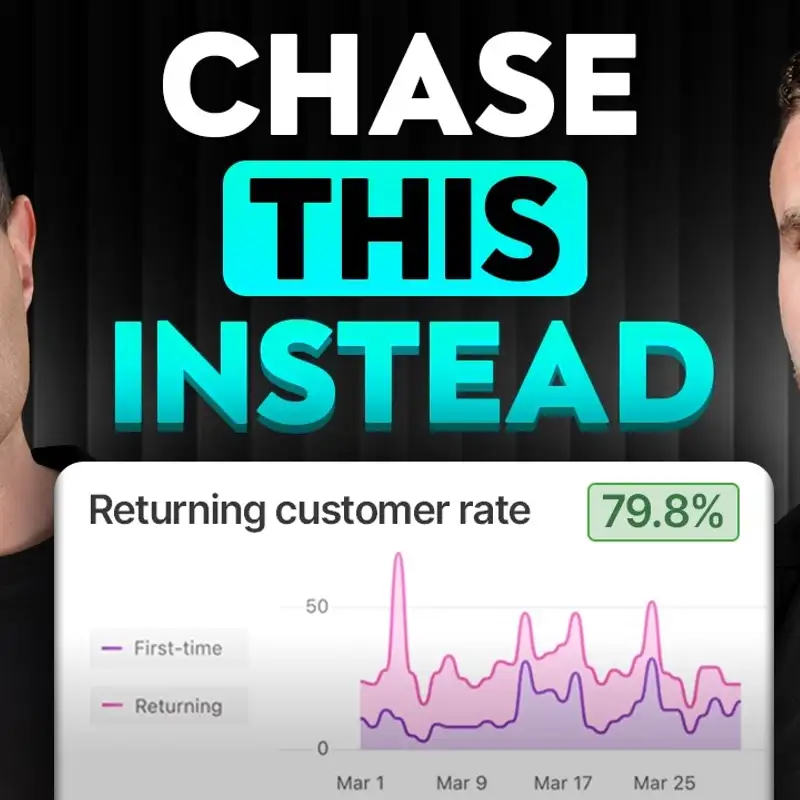
Carl Ludson: The problem is when chasing the first order, especially if it's like a lower ticket item, you haven't then got the money to invest in getting the second order. So it's very very important that you, you know, if you can get them to repeat the order situation. So that, you know, might order a second time, a third time, a fourth time. That is when they actually become a customer. The initial instance is them just testing you out. They're just trial in the water, so to speak. And if you can't get them to convert the second time, then there has to be some type of problem here. And also that additionally, it's like your profitability and lifetime value of the customer and the business as a whole obviously increases. If those customers keep coming back, you actually get to work out a lifetime value.
James Dooley: Yeah, for sure. Yeah. So like majority of entrepreneurs the they're obsessed with like you said with the first order there's a classic saying where um and it took me a while to understand this because I used to think like customer and client are synonyms of each other. And then I remember one time I was listening to Daniel Priestley and he was saying if someone's ordered from you once or twice they're a customer.
Carl Ludson: If they've ordered from you three times they're a client. If they've ordered from you seven times they're a loyal client. and what your job is as an entrepreneur is try your best to get them from a customer to a loyal client.
James Dooley: So with regards to that as well, I think another massive one where obviously I'm an investorreneur. I'm looking to buy businesses and one of the best business models that I can buy is businesses that have got monthly recurring revenue. Trying to build up that MRR. And when you're building up that monthly recurring revenue and you're getting repeat orders from the same customers, I know once I'm taking over that business, the multiplier of that business is worth so much more money than if you're starting from zero every month. So you get in and you're consistently on the flywheel on the hamster wheel of basically turning around to try to get new business, new business, new business, new business where you're like actually if I can on board one new client a week but and I can get them being one new customer a week and I can get them to be a loyal customer within a few months so they're reorder and it becomes a habit at that point. One a week that you're turning into a loyal client is better in my opinion than two new a day that are just one-offs
Carl Ludson: Because then first orders are like the on boarding like it's just hard work and keep on boarding new customers where you can change them to being actual loyal clients. What's your thoughts on the MRR?
James Dooley: Like what's your thoughts on another thing is you do a lot now with paid ads, right? So, I'm presuming the LTV is massive. Like we've we own like search.
Carl Ludson: Yeah.
James Dooley: And sometimes you're looking through the numbers and we're saying we willing to spend $100 for a new customer. But then if the lifetime value is only $80, then we can't run ads. So ads we need to stop. But if we increased the LTV and we got it to $500 LTV and it cost us $100 to acquire a new customer. At that point, you're saying, "Well, we can spend $100 to get $500." Can you explain that a little bit further? Why LTV with paid ads is probably the most important aspect of knowing what you can spend.
Carl Ludson: Yeah. So, like the hard part is when it's just a one. So, I've got an actual example of that. Well, I've got a few examples, but I'll pick one. So, hypnotherapy, I had a a great hypnotherapist in Newcastle. Um, they were winning work from paid ads. Um, and then I'm monitoring the account. I think they were getting average like a lead was when was 40 pound. But then when I speak to them, they go, "Oh, yeah, it's not so good." Because obviously I fixed them in one session. I'm over there. You fix them. you only have one session with these these customers essentially, you know, not a client. I'm like, no, no, no, no. I was like, we need to look at your business model here. You if you just fix them in one session, you're not going to make money. You you you working for time essentially. What you should be doing is you should be having an introduction session to work out what the problems are. You know, get to know each other. Do a a fix session where you're going to do the fix and then you should do a follow-up session, which is to make sure the fix is in place and if there's any other issues. That way you're getting the repeat of the three and then that £80 an hour session is all of a sudden it's made it to £240 and that lead has cost the £40. And that's like a pure example of where it then becomes a scalable business model because otherwise you know like you just said you're going to spend the money and you're just going to turn out the other side. Um whereas you know if you can do it for £40 and then you're making the 240 it just becomes you just keep spending the £40 wouldn't you?
James Dooley: Yeah. Yeah. So with regards to entrepreneurship sales advice with regards to getting them from a customer to a loyal client, how important do you feel trip wire marketing becomes in this with regards to trying to initially just get some sort of audit or offer? That sounds very enticing to get the foot in the door to get them to get the card out of the wallet and the majority time now they can do Google pay or Apple Pay. They don't do that but they
Carl Ludson: Don't own a wallet anymore. It's
James Dooley: Card out the wallet, putting the details in, paying it that first time to then being able to then improve upon lifetime value, upsells, downsells, crosssells. How important because there's so many people that seem to go in for the kill right from the very word go and go for a 5,000 offer like offering that they go I don't even know. Like surely you got to take the girl out on a date before you then try to take her back to the bedroom.
Carl Ludson: Yeah. Like within business, you've got to be trying to do that as well. You've got to try to offer them something to say, "Okay, I'll go out for a drink with you, see what you like, and then from there, then we'll decide whether we're going to have a second date and a third date and a fourth date." Like surely, like some of the ads of what you're doing with regards to sales advice for entrepreneurs should be they need to look even if you it's a lost lead, that first offer, just to get them on the hook to them. Okay, that's customer sales number one. How do I get into sales number two? How do I get them from number one to number two? Hopefully within that audit there's something within there even that just says almost as a free bid that gets them to just spend a little bit more again again not they've got a wallet but card out with a wallet to then be able to do it to then pay a second time to pay a until it becomes a habit of being okay now I'm paying and it becomes a habit to pay let's say search roof or whatever the service is that's being offered with AI visibility and backlinks and so on and so on like how important is trip wire marketing within this
James Dooley: Like absolutely hugely But probably even more so is the customer journey and your flow. Because you can do a $7 trip wire or a $40 trip wire, but if your follow process is terrible, you're still stuck in that same rut of you've just spent 80 or 40 pound for the lead and you've just spent 50 on doing the the audit or whatever it is. Um, so it's definitely one of the most important aspects, but more importantly, it's the you know your customer attention model. So, how often are you touch like getting in touch with them? You're not always just sell sell. You have to give information. You know, jab, jab, hook, I think we're just chatting about early on. You know, you shouldn't always be just going for the kill. They need to feel like they're appreciated and valued and that they're actually gaining knowledge from what you're offering as opposed to just always having to get the credit card out because you'll very quickly get sick of that. Um, and nine times out of 10 if if you've set that model up wrong, you'll probably get them to order again.
Carl Ludson: So important there, right? So you're talking about there's a few people call jab jab hook and some people say nah, dude. Jab, jab, jab, jab, jab, jab, jab, jab, hook, and like provide so much value that it's that they feel like they're having to buy from you because they you've helped them so much. And also you touched upon there um touch points like how important is it before my rhythm like surely needs to be is it twice a day once a day once a week once every few days like at what point does it become annoying with how many emails that you send in versus so many businesses I order from them and then never hear from them again and I'm like that that's horrendous. So there needs to be so I'd prefer all my businesses to be doing too much than too little. But how much would you say is it is it like like Julian Goldstein hits me twice a day every day. But I love him like because there's always packed with information. Do you know what I mean? Where I suppose probably answering this myself, it almost is depending on the niche. But like what would you say to someone with regards to the touch points?
James Dooley: How important is it to try to someone's not ordered from you for two months? So, let's say they have gone to stage number four to get them to stage number five and they've not done something for a couple months. Surely there needs to be some sort of touch points. There has to be every so often a hook or some sort of offer to an existing client to get them back into getting into the habit of getting the card out to pay.
Carl Ludson: You'd probably almost come up with like a a fall back cycle where you know maybe they they haven't ordered in two months and you've got like some type of product on the back burner that is just another sort of a little bit more cost than your typical uh low-end trip wire but it's just another lowcost item to get them back on the hook. It could be some type of new product that you want to launch into. So I know we've been mentioning a lot about with AI and AI visibility tools and things like this. So, you know, it could be something like that, some type of AI visibility audit, or it could be if you're in another niche. It could just be anything that is of a low um high quality information but low value on a cost. Um, and then entice them in that way and or pick up a phone. Sometime sometime I feel like I don't know if I'm just a bit more old school. Sometimes a customer just likes to actually have a chat with someone and I feel like in the online online age everyone's doing emails but actually sometimes text go on WhatsApp text them all and even though you're not picking up the phone and ringing them they feel like it's a more personable sort of service. Do
James Dooley: You know what's random about that right? So we've always been a big advocate of not just doing um email um sometimes it can go into the spam so sometimes I don't even know you can get like read receipts and stuff like that. So we started to do the SMS and we started to do the WhatsApp. And one thing that absolutely blew our mind with regards to conversion within touch points and upsells and getting them from customers to being loyal clients was it wasn't actually picking up the phone which which is which is I think the best method right but it's not infinite scale was a voice note on and it was only like 40 seconds on a WhatsApp which normally mine are like 30 minutes
Carl Ludson: But 30 minutes is that a quick one. 40 seconds on a WhatsApp, but you can resend that same voice note. So, it's I just catch up. You don't need to say the name because obviously it's generic, but they don't realize it. It sounds very bespoke to them
James Dooley: That then basically goes back to them to say just want to say we've got this amazing offer on you to be a beta tester. With AI nowadays though, James, you could probably take that further and actually personalise it.
Carl Ludson: Yeah, you can. Yeah. Yeah. Get 11. You see what I mean? You could definitely, especially with your AI agents that I've seen, like you wouldn't actually really tell that it's not.
James Dooley: Yeah. Pretty good. Anyone who's watching this anyway, is there any other advice you would give with regards to entrepreneurship sales advice, specifically trying to improve existing customers to become loyal clients? I'd love to know in the description. Carl, it's been a pleasure. Chess man.
Creators and Guests