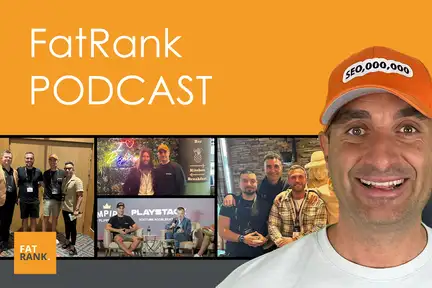
Google AI Overviews: How Brands Get Picked and Recommended 24/7
Download MP3James Dooley:
Google AI overviews. There's a lot of people in the SEO community all asking the questions of how they can get the large language models like chat GBT and Gemini within Google to start recommending their brand. There's a lot of people in the industry are saying that SEO and GEO is exactly the same thing. And today I'm joined with Chris Munch from Amplifier. He's been sharing quite a lot of success stories where he's amplifying the messaging across multiple platforms. So, I wanted to get him on. And Chris, pleased to meet you. It's a pleasure to have you on.
Chris Munch:
Thank you, James. Pleasure to be here.
James Dooley:
So, with regards to Amplifier and with regards to obviously trying to get the the messaging out there to be able to manipulate or feed the LLMs to get them to site you, what what bit of advice would you give people who's watching this for? If some people are saying that SEO and GEO is the same thing, what what's your thoughts on that to start with?
Chris Munch:
Well, I think there's there's a lot of similarities and in the end, you know, there's chat GPT, you know, AI overviews is they they function off two things. So, first is their knowledge base, right? So, you know, they know everything that's ever been written. Um, and then they search. So, that's the two things that they do. So, if you're going to ask a science question, a math question, it's going to use its knowledge base. If you're going to ask, you know, what's the best product, right? I'm looking at a microphone. What's the best microphone for podcasting? Then it's going to do a Google search. So, chat GPT is supposed to use Bing, right? But they don't use Bing as as maybe as much as they should considering the investment. They're using a lot of Google results from um test and it's been shown. So, in the end, it's a little bit of just a different interface for a search engine. So then a lot of similar stuff from SEO would would carry over.
James Dooley:
So obviously a lot does carry over with regards to the semantics and um content and links and stuff like that, but there's a lot more now on consensus on off page on trying to build up that corroboration on third party sources. Can you explain a little bit more on that to people that's watching this?
Chris Munch:
Yeah. So, you know, if I think it's still helpful to look at it as a search engine and it's just really that the algorithms change somewhat. So, when you've had a flood of AI content hitting the internet, um, and you also had a lot of the issues around say parasite SEO with a lot of junk being posted in all sorts of places, then Google has pushed back uh against that. um you know and one of the ways which they approach that is they like to teach people a lesson I guess right and so they they make some examples they maybe do an update that's a bit brutal and a lot of people get banned and then they hope that the industry figures out a better practice which is you know more in line with what they're looking for and so what does that mean you know for a for you know for a brand or for a website um one of the things they did is they raised the bar massively on brand signals right and so Um this is things like brand search which has always been a thing. Brand search has been a thing for you know I think for maybe even like 10 years but it became more important and then um links as well became a bit more important but in addition to just links is actually like the entity the brand itself if it is it being mentioned and so you'll probably notice if you start a new website Google doesn't really understand what the name of your website is. you Google it, it might show kind of some random stuff and then eventually like if you build a brand over time, you get the site links, you know, where you've got the different options to the sections of your site. Um, and that's as Google starts to understand it as an entity. And so you've got the entity of your brand, but then you've got the entity of products that you sell. And so you're trying to build up enough information that's out there online that Google, the LLMs see it as a real thing. So that's kind of like the the first stage. Um, and so that's going to be different in every industry of kind of what sources they pull from. But the simple the simple thing on that is the more places that you're talked about, the more the more reviews you have, the more links you have essentially just the more places that your brand is mentioned, social media, video, you know, websites, all of those things. it's much more likely that you're going to be picked up and referenced as a solution as a product in a given industry. So, you know, the the way that we approach this is if we start working with the brand, it's like, okay, well, let's get the product talked about in as many different types of conversations in as many different places as possible. And we do that from a perspective of, you know, not just random conversations, but conversations and questions that buyers would have. So, because if you think about it, someone's going to go to an LLM, they're going to go to Google, they're going to go to YouTube, and they're going to ask a question about a product or a problem of which a product might be a solution. And if the answer isn't written or spoken somewhere on the internet, then and it's not in the knowledge base, then how is the LLM going to pick it up? So, the first thing it has to be has to be present. You have to leave that clue. Um, and so if you think about any specific product, right? So you say best microphone for for podcast. I'm looking at a Blue Snowball. Um, how many questions are there about a microphone? You've got, you know, like the audio levels, the hertz that it might do, um, you know, the different styles, the different size, is it going to be, you know, stuck on you? Is it, you know, going to be a a standup one? Are you going to have a a pole or something like that? So there's all these very very specific questions that people have and so when we dig into any specific product and you really start to look into what are the specific questions people have it goes really deep. So and a lot more than you would expect. So if you're you know uh selling a microphone you think okay well there's all the features but there isn't just all the features there's all the competitors. So every comparison to every other microphone or microphone brand is another thing that people would research. Um they also you know use a lot of terms like best top. Um and then there's use cases. And so if you look in the microphone industry you'll see that people search for best microphone for Xbox for Zoom right for podcasting. um even though it might be the same thing right because the difference say between Microsoft Zoom or sorry Zoom and Microsoft Teams the microphone doesn't make a difference but people will search that specific use case and so you will literally have hundreds if not thousands if not tens of thousands of questions in your industry um and so just like you know in the SEO days you could create an article which answered quite a specific question it would be lower competition and you could rank for it um that's being extended Because what happened with Google just before um AI came out um is if you did a really specific topic, Google started to ignore those and they started to place bigger websites that would cover the topic more generally because I think Google saw that a lot of people were putting out very lowquality content, answering very very specific queries, putting out junk just as like AI content was getting to that place. And so they said this is too difficult. It's too costly to filter out all of this noise for all of these specific queries. And people don't ask too many of these really specific queries anyway. So we'll answer it with a general article. So if you ask for best microphone for Microsoft Teams, it's just going to give you an article on best microphone. And that was preAI, but now people get specific answers to that from ChatGpt and from Google AI overviews. And so they now expect that answer. So Google has no choice but to start sourcing that sort of information. And so therefore it was left with a difficult situation. It's like, okay, we've got all these low competition terms that now we need information for. And you've got all of these spammers that are going to throw out junk content on all of these topics. Um, how do they filter that is essentially they just leveled up the brand signals and so if you're a small site, you're it's going to be really difficult to be seen. But if you're a bigger site, it's going to be much easier to be picked up. And so that's where the the magic starts to happen is you have to figure out, okay, what are the ways that you can make the brand more authoritative and how can you leverage other sites which are already big that are trusted to feed that information in? So that's essentially what we do.
James Dooley:
Yeah. So on on there then you've spoke about um you're trying to find obviously all the different queries, but when you're looking to get all the different queries that come back. There's quite a lot of evidence now that shows the way people search in AI is very different than the way you search let's say in Google. So in Google normally generally speaking a study came out studying over half a million queries that an average the word count is 4.2 words but within AI it's nearly four times that amount. So they're asking multimodel they're asking like okay what is the best microphone for Microsoft teams that's got this like you said audio level and that's under £100. So there's so many different caveats to that of what's coming back. So are you then trying to go after literally the the ridiculously long tail and there's so many unique kind of queries now coming back or are you using some sort of tool to extrapolate the synthetic queries that query fan out does that then comes back saying okay these are the ones we're going to target because chat GPT might do three or four synthetic queries of that with query fan out but then Gemini is doing let's say 8 to 10 are you going through those ones as well and looking at that and saying well I don't is there's case studies, there's awards, there's um reviews, testimonials, legit scam, contradictory type words as well. Are you just trying to go after every single one of them that potentially comes back and then syndicate that out in as many different multimodel, multiformat places as you can.
Chris Munch:
So, I mean, that's one way that you could approach it. And I guess, you know, we we do that, but we do it from a a different approach. So, we're not looking at, okay, let's figure out every possible combination that someone might type into chat GPT. Let's see what chat GPT and what searches they do underneath. Um, obviously, you know, there's the main ones that if you do search for a product, um, then chat GPT, Google AI overviews, Gemini, they're going to search for best and top lists, they're going to search for reviews. So, you would want to make sure you do reviews and that you also do top lists. and we've seen that they're very effective for driving traffic. But overall, the way that we approach it is we think about it in from a customer perspective of really thinking about the research journey. So this is this is the big contrast I think in to how maybe most SEOs approach it and also um also how people in paid ads understand what what's going on. So, if a paid ad is running, then people are going to see the paid ad. The things you talk about in the paid ad, they're going to Google. They're going to Google the product name. They might Google the ingredients of the features that you mention. So, you need to make sure that you've got that covered. So, for you as a brand yourself, you probably already know what your ads are talking about and what your competitor ads are talking about in terms of features and who the competitors are. And so we approach it from thinking from a perspective of what are people going to look for and search for and we use keyword tools in a very limited way. So we're more figuring out and going on the journey ourselves of how someone would go from having the problem to discovering the products and then going through all of the different products and all of the different things that they might care about. So yeah, price is one thing they care about. Okay. So you want to make sure that you include that information. Um, and that's, you know, uh, that's something that quite often clients don't want to do. They don't want to talk about prices, especially say local businesses that are involved in, say, local services where the price can change if they're a roofer or something like that. They don't even want to mention what the price could possibly be. So, you have to persuade them like, no, we're going to talk about pricing and give a range on the website because that's feeding information into the LLMs, which they can then pick up on, and then you can then be be referenced. So, it's looking across all of those things. So, it's like, okay, they're looking at pricing them, doing comparisons between competitors. Um, it's like, okay, they're looking at specific use cases. So, we'll just start stacking out all of the different things they care about. So, if it's a microphone, you're like, okay, they care about platforms like Teams, like Zoom, and then you list them all out. It's like, okay, that they care about pricing, and they compare about pricing in these sort of ranges. They they compare these sorts of products one to another. There's these types. Okay? And then you might even have things like colors, right? And just other features. And so you really dig into all of that and then you have all of these combinations of different things that people might be looking for and you just want to make sure you place the information. Um, and so sometimes, you know, when you're feeding LLM, when it used to be with Google, you'd have a page and a page would be optimized around a certain keyword phrase and some related ones and it could rank for that. With an LLM, you have that same thing. Um, but you also have all the sections, right? So you've got FAQs, you've got subheadings and all of those things and they're answering specific information. And so in an article, you can imagine that you can see how it's structured. And the way that you write, you want to write in a way which if it's blog content, say natural language processing, it's more simple. That just means that you're writing in, I would say, a simpler way. It's not uh abstract. It's not um you know, persuasive. It's not kind of storytelling. It's you know X is Y. And that's cheap for Google and LLMs to pass that information. So they give it preference. We've seen that they like that type of content and tend to give it preference because it is giving good clear information. And if you consistently use good data, you're not uh conflicting with the data that you've got on your website. These are also little things which score you points um with Google LLMs to site your information. Um, and so it's it's a lot about just answering a lot of questions through all of your content. And you can do that in a blog post, but then Google the AIS, they also like to check out social media. So, can you answer that those questions and put that information in social media? Can you put it in a YouTube short, in a YouTube long? Okay, can it be expressed in an image? Um, you know, can it be expressed in a podcast? and Google chat GPT, they look at all of these different sources and then essentially you're building up some consensus as you post in more places. Um, but you're also doing it for users. So I like to do things where you're doing something which is for people and you do it anyway because then it's got more longevity. So if you're doing something which you know is just to rank in the LLM just to rank in Google eventually that door might be closed. But if you do something which is for users and it's useful for Google, it's useful for the LLMs and it's useful for people then that tends to work for a long time. So just very simply is answering questions on your product and all of the different things which people might might want to know the information that they're looking for. Like that's a good idea to do. Okay. So great. So we should do that and do people look across different platforms. Do they go on Instagram? Do they go on YouTube? Do they go on blogs and search Google? Do they listen to podcasts to get this information? And you know the answer is yes. Like people research stuff now across all sorts of different platforms. So where Google used to be the dominant like 90% of research was done through Google now it's about 25% is done through Google and the rest through YouTube chat GPT right Instagram all of these different places. So, you need to be on all of these places. Um, and what's interesting is Google's share of that pie for research has dropped to maybe 25%. Um, but their traffic has grown. So, they've lost massive amounts of like market share in terms of people searching and doing research, but they gain traffic because people are researching more than they ever had before. from what you said, you know, about how many keywords or how many words people will search in the LLM where they're doing like 10, 12, 15 words, that's happening in Google already. So, Google's just catching up because it's becoming an AI uh answer platform at the same time. So, you know, the two things are converging what you know used to work um for SEO now applies over a lot to chat GPT. I would say one of the things where we've seen maybe SEOs go a little bit wrong and something which I don't like in the industry is an over reliance on maybe technical stuff, right? And so you probably know this that when it comes to technical things wrong with a website, you can have a list of like 2,000 things which in theory are not good for SEO and not good for the LLM. um but it might only be 10 things that you really need to address which would drastically move the needle and everything else either just doesn't have an impact or is very very small. So I think often in SEO there's an overemphasis on the on page stuff. In most cases if you're using WordPress or Shopify all the optimization is built into the platforms and it's only if you get really really big that you need to worry about the smaller stuff. And so you just need the basic things of you know metatitles um good linking structure on the website um and then schema. And the schema is the straightforward product schema that you would have on an e-commerce site. You want to make sure your Google shopping feed is set up. So chat GPT um and Google they rely heavily if you're a product on the shopping feed. Um so that's helps them understand what the entities are, you know what the product name is um you know what the pricing is and then put that in their database and chat GBT and Google rely on that very very heavily to give recommendations. So, if you're an e-commerce site and you don't have that, you're going to miss out significantly um by not having that because they don't fully trust or know um what your product is or or know like where the where it can be sold. And you know, there's a convergence as well towards making the purchase inside of the app. So, you've got Tik Tok shop. Tik Tok has a preference for buying inside Tik Tok shop. Um, Chat GPT will soon have a preference for buying inside of Chat GPT with the Shopify integration that's happening. So, if you're on Shopify, it's going to be very easy to do. It's like if you're hooked up with Google Shopping, it's going to naturally uh flow into that. Um, but if you're say using something like Magento that doesn't have that connection set up so easily, maybe you have to work on the schema a little bit more because it's not naturally set up inside your theme or something like that, then you know, you might miss out on that. So the sooner that you do that if you're e-commerce the the better. You don't need to go excessive with with schema. So like we've had a medical client and they built all this advanced schema because they store it on schema.org but it's nothing that's used in the LLMs or or Google. So then arguably it doesn't have an impact. It doesn't make a difference. And there's only so much schema that is used because again it was abused in the past by SEOs that overdid it and so then they don't use it. So they're only relying on the most essential like the the product schema, some of the local schema as well.
James Dooley:
That that was going to be a follow on question that I was going to ask you. So I've got a few questions down here almost like quickfire type ones. Do you think scheme is important to get in the AI overviews or not?
Chris Munch:
Um, so we've seen that, you know, if it's a if it's a product query, if it's a review, if it's a comparison, then you can still show up very well in in um in chat GPT and Google AI overviews and Gemini and cloud. Um, where where the schema starts to get important is especially in more competitive niches is where it's going to start to recommend specific products. And one thing Chat GPT likes to do is it encourages to use their shopping research feature. And when you switch to the shopping research feature, it wants to be able to send you to a page which has a buy button. It's got the pricing information. It's very certain on the information that it's got. And so it doesn't like that say from a blog post, right? And it won't like that from a product page which maybe isn't structured well where it can't be sure of like, okay, what's the discount and what's the price? and it has to figure that out because it's not explicitly stated in in the code. Um, and so certainly like as you get into specific product queries and it's recommending a product to purchase then you know you're going to run into issues. So for example like if you said uh you know um and this is a real one like which um so Brian Johnson the longevity guy he uses certain devices and so like there's one device which he I think he clips on his ear or something like that and it lowers his his HRV right his heart rate variability and you know you go search and you go ask chat GPT which product is he using then chat GPT is going to give you an answer and it's going to say okay it's this product that he uses um and it will go and source the information from a blog. Okay. But if you then say uh you know, help me find a good deal on a HRV uh device, which lowers my my HRV, then it's going to do more of that Google Shopping type search, and then it's going to be looking at the product schema to say, okay, there's this product at this price from this website. Um and that's where you would be, you know, missing out. It would be much harder to show up if you don't have that. So that's where we see it being most important is the product schema and making sure that your Google shopping feed is is set up well.
James Dooley:
Yeah, for sure. I mean for me like there's so many people out there in the communities that saying oh schema it you don't need it it's not needed and stuff like that and it's it's mainly there for clarity and confidence of them understanding exactly what it is like you said explicitly and need to they need to know and not just second guessess and schema allows it to do that and it's very cheap for them then to pass the information and they've got the clarity and the confidence but a few other questions so I was listening to you Chris and you was talking about Um, yeah. So, what people now need to start doing to get in the AI overview is they need to start getting that bit of content from a blog article, they need to be putting into a video format, long form, short form, try and get an image and sharing an image out there, sharing it on social media, doing a podcast. And I'm sat there thinking, this is what people should have been doing back 10 years ago. It's just general branding and holistic marketing, being omni channel, being omniresent. And I feel like SEOs were so backward back then where they were just obsessed with keywords on a page and not doing what a real brand would do, going sharing it in all these different places and it just feels like now SEOs are just having to catch up with what general marketing is. Would you agree with that?
Chris Munch:
Yeah, I would say I would say that's true. I mean, when you look at the cause of that, it's because SEOs could get away with not doing those things. So, you know, if you don't have to build a brand, if you don't have to be everywhere and you can still get a lot of traffic, then, you know, people didn't do that because they didn't have to. But, you know, eventually the algorithms caught up and they changed and it's like, okay, you know, you need to be a brand otherwise we can't trust you because there's too much spam. Um, and so, yeah, now like you just have to do all the usual marketing stuff and that's totally true. The challenge with that is, you know, if you're a relatively small brand, seven figures, eight figures, um it's difficult to be on every channel. Like even if you're doing eight figures as an e-commerce site, um you know, you might have a team, but how many people do you need to cover, you know, LinkedIn, YouTube, Instagram, Tik Tok, right? And then also doing blogging and then also doing podcasting and all of these different things. Well, that's a lot of work to do. And so, it's beyond what most brands are capable of. If you're a 9 figure company, then sure, you can have an entire social media team, an entire content team, but it becomes more challenging when you're smaller. Um, and so, you know, there's some AI solutions where you can say, okay, well, I'm going to do an AI blog because I don't have the resources, so I'm just going to use some software and I'm going to, you know, press a button and it's going to make a load of topics. And the challenge with that is that if you do that, in 99% of cases, you're actually going to cause your traffic to go down, I would say, um, if you don't know what you're doing. So if you rely on say chat GPT to write your content um it's going to create content that isn't good that's generic um and just from a common sense point of view if anyone can go to chat GPT and say write an article on this topic and then it just goes and does it well then everybody's got that same information and so Google does appear to have a way of figuring out and seeing that type of content when it's done too much. So if you do it once or twice on your website, no big deal. If you consistently do that on your site, we see this over again. It works in the beginning and the graph is is going up, the traffic's going up, but then Google goes, hm, all this content doesn't seem to be good quality. Um, it doesn't compete very well with other topics. It doesn't seem to be written so clearly. It's got a few signals that it's low quality. Not a signal that it's AI, but a signal that it's lowquality. Okay? Okay. And there's lowquality AI signals and then there's AI content which can be detected but it's not low quality. And like one of those examples would be what we've seen is you know the word navigating right from how AI likes to write. So like navigating the digital landscape. If you go and search for navigating the digital landscape you'll find thousands of pages written with that title and written with that particular phrase. And that's not something that a good writer would use typically. It's overused. It's not good. And so there's many signals like that which shows there's no editor looking at this and the title is very bland and there's a lot of fluff. So Google can detect that and then that stuff is going to be filtered out over time. And so one of the ways which Google dealt with this is rather than trying to figure out what's good and what's bad. If it just sees a signal that the quality goes below a certain threshold on the website, it says you're done and it's going to punish the majority of the website. This has actually happened to Jasper.ai using their own software. Their traffic was going up and then their traffic has just absolutely tanked um in Google because they are putting out content which might look good or okay to a reader, but it's not the type of stuff that Google is looking for. So that's also something you got to be careful of is the content has to be done in a way which is actually useful is adding value is adding information is adding data and is the right format for the medium. So you know there's a way to write blog post and there's also you can't just take a blog post and then turn it into a video right and then you know have the have someone reading this the script of a of a blog post because it's not the right format. It's not going to work. It's not going to get the engagement time. In a blog post, you give the answer immediately. In a video, you might delay the answer a little bit to increase the the watch watch time and engage people, just as like one example. So, all of these different things when you repurpose across all of these mediums, you have to think of all of that. And that's a big problem. So, sure, you can churn out content that goes everywhere, but it's not going to be effective. You have to do it in a way which actually, you know, works for the algorithm and works for people on those platforms. And that's you know one of the the challenges and what I see like like you say say James is like okay like now you have to build a brand everyone's aware of that you have to be on present you have to be everywhere um but there isn't a good solution to that other than saying you know work your ass off and try and be on every platform and figure out every platform which you know you can be an expert in one two maybe three platforms but then after that it's like you know each platform is so different it's going to be difficult for any one individual to do that. Um you know so in our platform we have structured it so that each module each piece of content that goes out to these different places is optimized towards the algorithm and you know optimized for how content should be on social media optimized for how it should be in a YouTube short versus a YouTube long right and so on and so on and so that's the way that we've approached it and you know there's plenty of work to be done to make that even more effective but that's really the direction that you've got go. And if you're a smaller brand, then you're going to have to use automation to be present in all of these places. You're going to have to use AI because otherwise it's just too much work for a brand to be able to consider with the
James Dooley:
Yeah. Right. So, so on there, I want to get into a little bit. I don't want to be in a full-on sales pitch going, "Oh, everyone needs to go to Amplifier and that's it. That's the golden bullet. Just go to Amplifier." However, you've got my attention. and you've sent quite a few statuses out there about Google AI overviews and being able to get in there. There's one there saying everyone to comment big sites and there's loads that you you'll send through all the big sites of what's working. You talk about multiformat so you're talking about image and video and podcast and stuff like that. But let's do a bit of a role play. I'm I'm a roofer and I haven't got the time to be learning the LinkedIn algorithm, Instagram algorithm, YouTube shorts, doing long form YouTube videos, podcasting and stuff like that. If that roofer came to Amplify, how does how does that roofer might not want to go doing podcasting? Are you doing that with AI with voice agents? Like what what's going on there? Like what can you be doing for a roofer within Amplifier?
Chris Munch:
Yeah, sure. So, you know, this is uh true for any brand. So, you know, you're going to have a certain amount of resources and time available. So, then it's a choice. And so, what we do is, you know, like if you're maybe into marketing, maybe you've got some time, then you can do this DIY. You could come in, use our platform. It doesn't take long. Like you can produce, if you're just going to take the output that's given, then within about 2 minutes, you can, you know, pick the topic using some of our tools which will help you do the research. you you then you know uh include some of the information which you want included either from your own research which you can do very quickly and then you press a button and it's going to create all the different content formats for you and then you can just review them edit them and put them out. So really you know in somewhere between 20 minutes to an hour then it's quite realistic to be able to create all those formats review them and then publish them because the we have a good hit rate on the quality of the content if you know how to use the platform. So, it's realistic that someone can come in and post once per day, right? They can create content once per day. And we're actually seeing that brands that post content once per day see really significant upticks in the amount of sales. Okay? And so, for some brands, that's from just doing one piece of content per day that they put out across the channels, that can add like seven figures in sales for them, right? So, that's not unusual. That's actually pretty common with a really, really good return. Um, and then you know a second option from that is well if you don't want to spend that 20 minutes to an hour editing right you can have our team do that. So they will create the content using our platform do all of the editing do all the optimization for you to make sure it's clean all the data is right uh all of that stuff. So that's the second level. Then the third level is pure agency service where we're handling like the entire strategy. So if they have the budget for it um and they don't want to be involved at all or they want minimal involvement then we will do all of the planning around what are the the right topics all of the strategy um a few extra things thrown in and then we'll handle the the entire thing. So you know it just depends on the the level that someone wants they can do it themselves with the software all the way up to us just you know handling and planning and everything and you know uh handling the entire strategy.
James Dooley:
Sure. Just let me let me try and repeat that and just make sure I'm getting it the right way. So people that are listening to this is all three of those services all under the same brand of Amplifier. Is that correct?
Chris Munch:
Yeah. Yeah.
James Dooley:
Right. Amplify. You have the software ampcast which is the AI which creates all of the formats.
Chris Munch:
Yeah. Essentially we have you know the amplifier agency where we can deliver the entire service for you and handle everything. So you can use the software, you can uh have us use the software for you and you know you just order the topics or we can handle the entire thing. We come up with the topics, we come up with the entire strategy, we check your website, you know, for optimization issues, all of these different things.
James Dooley:
So with regards to that, so the first the first one's a SAS. They can go into it themselves, use it, get the information, syndicate that out. The the second one's the service. The third one's fullon agency. We'll take care of it all. So, let's say I'm the roofer and I say, "I don't want to get involved. I'm a roofer. Just get me more roofing leads. Be done with it. Here's the agency." How then are you creating like videos and podcasts and stuff like that? Are you asking them what they want you to talk about and then you're getting like an actor to do that part or how does that bit work?
Chris Munch:
No, we would more educate them on on what we should talk about. So, you know, the biggest reason a client will fail will be down to the client, either blocking the content or trying to dictate the process of what topics and so on that we should do because they don't fully understand the the process. So, you know, when we're bringing a client in, we're just making sure that we're going to be on the same page. We explain what we do, what we like to lead, um, you know, and essentially encourage them to step back and not be so overly involved because we're doing often such volume of content, it doesn't make sense for an owner to be reviewing that much content because it's, you know, tens of thousands of of words. It's just not uh good for good use of their time. So, we will handle the entire thing. Uh, we will come up with the topics and, you know, we're trying to learn from them. Okay, so what information do you have? What are the product prices? What are the brand guidelines? And quite often they don't have those things organized. So we'll organize that stuff with them. And then the platform itself is then creating all of the content, right? So you know, we're not hiring an actor to do the podcast. The podcast is AI. And you might say, "Oh, well, I would never listen to an AI podcast, right?" And that might be true for some people. Um, and I think a lot of people say that. It's like people say like, "Oh, I'm never affected by an advert. I always ignore all the adverts that I see." But there's always a moment where an advert comes on. It is what you were interested in and it does go in and you end up buying the product as a result. You just don't realize because it's maybe more subconscious and you will watch an AI video from time to time and maybe you don't realize it's AI or it just happened to have good information in there that you were looking for. And so, you know, if you were doing a podcast like you're doing it, it makes less sense to do it with AI. But if it's someone researching a product and they've got a really specific question um and they prefer to listen to answers or watch a video, right? And the choice is between that doesn't exist or there's an AI version, right, which is good quality, it's got a good script, it's written well, it gives you the answer. Maybe it's 60 seconds, maybe it's 3 minutes, but you get the exact thing that you're looking for. Um then for me personally, I'd prefer to watch a more engaging video than have one not available. And so and the technology is getting better and better that these are becoming more engaging, more lifelike, more real. So, you know, we approach it from that perspective of okay, well, it's a product question. It's not entertainment. The bar on quality is a little bit lower. And so, therefore, it's about the script. It's about the information. It's about just being engaging and having good visuals. You don't need necessarily to have a presenter doing that for every single topic. Um, and in the end, it just works. So, we put out that content in a lot of different places. If it gives a good answer, the video is uh well scripted, right? The podcast is well scripted and it's interesting information and you want that information, then you'll listen to it and it gives people the answers. So, you know, it's just making sure that you're putting stuff out which is serving a purpose. It's adding value, right? And you're not just putting out content that would be maybe a podcast that nobody ever listens to, but it feeds the LLM. That's the wrong way of thinking about it. You want something that's actually scripted well that people would be willing to to listen to. And so that's what we've that's what we've built and how we structure things and keep working on that to improve it as the models and as the technology gets better.
James Dooley:
Yeah. I mean I completely agree with what you're saying there. I think if it's not there versus being there it's better and someone wants to physically listen. I think a lot of people nowadays don't even know they're getting that good with the AI voice agents. They don't even know that it is AI is one part. And then the other part is we actually ran some tests. Obviously, we're now here. I'm here with Chris Munch. I'm James Douly. You can see we're all moving about and we're all real and stuff like that. But I actually did some tests with certain people and they had their own podcast and it was just so so much fluff in there and then they ended up doing an AI podcast and they did a full podcast series and it ended up getting so much more engagement. It was there was half in time and there was getting the information and the information was dense and it was like five minute podcast versus 25 minute podcast and people was actually preferring that because they're just removing all the fluff and being very factual very direct. This is what I'm about and therefore you're seeing and you're seeing more and more of that over time.
Chris Munch:
I mean it's quite sad when an AI version of yourself beats you, right?
James Dooley:
Yeah.
Chris Munch:
But yeah, that's the direction that it that it's going. And yeah, you know, for me it's like I still see like a few of those where people are using their own AI avatar. They appear maybe on the channel sometimes, but they're filling it with a lot of their AI avatar content and it's quick. It's fast-paced and it's just they're able to cover so much more news that they couldn't possibly do, you know, if they if they were doing that themselves because it's just too much volume.
James Dooley:
Yeah. I mean, do you know do you know Julian Gold there?
Chris Munch:
Yeah. Yeah. Yeah.
James Dooley:
So he he's got like six AI channels and two of his AI channels outperform him and like sometimes he'll message me and he'll be frustrated going the AI version of me is better than me and I'm like I know mate I just wind him up about it but it's like it's for for some topics it's so true up for others people don't want that but for some that that's what people want. They just want in and out information and stuff like that. But I want to I want to wrap it up now. But I want to do one or two quickfire questions like very putting a spin on amplifier and putting a spin on obviously you want to be holistic marketing. You want to be out there. You want to try and manipulate them AI overviews to get the answers and get AI to start recommending you. But you talk a lot about multiformat. So you've got image, video, podcast, um maybe PDF sharing, textbased and stuff like that. Is there any format that you believe work? If if for some reason someone couldn't go and do multiiformat, what are you finding at present works best? Is it video? Is it image? I I know the answer is do it all, but if if you couldn't do it all for whatever reason and you was doing image, video, text, PDF, listicicals, what are you finding works best specifically to try and get brands in AI overviews?
Chris Munch:
Yeah, so that's a that's a really good question. Um, so I think one of the easiest ones to start with is text article content on your site. Um, so providing you've got to a certain threshold of of authority, at a certain point you can just answer more questions about your product, about your industry, and if you do that regularly, like at least once a day, you're going to see organic and its quality. Then you're going to see organic traffic increase because you're answering questions that buyers have, and hopefully you're covering topics that haven't been overdone, right? So the the content topic planning is important. Um but that's easy because it's fast to create that type of content. Um and it works well. So video is the second one. Um the challenge with with video like is actually being able to build the following, right? Or to be able to grow the channel well enough. And the videos don't feed the AI quite as well as textual content does. So we're seeing that blog content is um really really good. And so what we actually do is because the blog content is um relatively low cost to create very fast and very scalable is we'll do more blog content than the other types. So you know we'll do maybe say five to 10 blog posts and then we'll pick one of them which we're going to amplify and then do all of the other content formats for. So it's like you're doing 10 and then you're picking the one either which you think will do best or based on the data of like what is actually performing well where you see the volume is there people are asking the question it's showing up in in answers it's driving traffic and then you cover it across all of the other modules so we approach it like that but I would say blogging or article content first especially around competitors so competitor comparisons competitor reviews and pricing and you know best of lists they seem like a weird thing to put on your own website because you're mentioning a competitor, but you know, you're not advertising those posts on the homepage and say, "Go check out our comparison to the competitor." You're not doing that. It's hidden within the blog. Users don't typically find it when they come to your website, but they will find it when they go to Google and they start researching your competitors. They start making those comparisons. Um, and ultimately a big proportion of people do that. Um, and so we see massive gains doing product comparisons, product reviews, top list, it shows up in LLMs really well, drives a lot of traffic and it's high converting because, you know, it's at the bottom of the funnel.
James Dooley:
And then with regards to listicles, are you doing self-referencing listicles? obviously putting yourself in on your own time yourself number one and competitors all the way down cuz a few of them was moaning that that's kind of I know it works still well in in a lot of cases but there's quite a few sites that seem to get hit when they were self-referencing doing listicals. Have you seen that anywhere on any of the sites?
Chris Munch:
I haven't seen that or noticed that. Um and you know I think the the key to that is is to remain as impartial as you can. Right. So, um, if you're going to do a top list is be fair to your competition. Don't slander them. Don't make stuff up. Uh, and make it very, very useful. So, it might just be from the type of content which we do, but because it's useful, because we're not saying a competitor is terrible, um, and we're actually saying good things about the competitor, right? But essentially, we're saying, okay, like, so this is our product, this is our place in the market, and we are good at these certain things, and people buy us for this certain reason. is you present those reasons and you present that positioning and so then you're essentially like okay we're the best budget choice we're the best high-end choice we're the best choice for podcasting whatever that might be um but you know there's good evidence and reason behind that then I haven't seen an issue with that so far
James Dooley:
what about like syndication for like image sharing or PDF sharing are you doing any of that like grabbing let's say an image of let's say a review or a testimonial you put onto an image with the logo goal. Are you then syndicating that out everywhere? And if you are, how are you managing to get Google bot to crawl? Are you putting them into an indexer or something like that?
Chris Munch:
So, um, yeah, we do PDF content, um, not with a purpose of just making it a PDF content, but we'll do, you know, one of the content formats is a flip book, um, you know, which can fit a slideshow format, a PDF format, and then we'll publish it to those sites. Um, you know, I'm not so worried about is Google indexing it. Um, it's more that just should you make that content format and should it be available to people and is it useful and then just putting it out there and then you know Google's going to have sometimes preference for podcast, sometimes preference for PDF, sometimes preference for article content. That's not so much my concern. It's like Google has all the options, right? And all the different platforms have all the options of the different content and so then the platforms, the algorithms users, they can they can find that. So I don't worry about it so much. What we do see is like, okay, let's say we do a flip book. It's got good information that answers the the question that people are asking, like, you know, a comparison or a comp like the best product or a specific use case. It's got a really good answer for that. It's out there somewhere. We might publish to say 10 15 uh sites which might host that flip book. Um, and maybe 10 of them don't get indexed. Maybe 14 don't get indexed and it's only one. Uh, but you only need one that that's indexed and is is findable and then it's having a positive impact. It's feeding the LLMs. So, we don't worry about that too much. And we see, you know, one week Google might like one website or one type of content, 6 months later it's something else. You don't have to worry then too much about, oh, this website was penalized and Google doesn't like it anymore. It's like it's always whenever there's these penalties, people forget that, you know, Google's removing traffic from one place, but they're giving it somewhere else. So when you do this strategy and you're only present is normally the other place where it's given traffic to the other medium, the other type of content is you already have that out there. So it just it just balances out.
James Dooley:
Yeah. And then with regards to so let's go back to the roofer scenario. This so there seems to be so much emphasis with the AI overviews on reputation. So reviews, testimonials, case studies, awards seem to be the main thought. So we've covered reviews and testimonials. Are you proactively trying to get contractors or clients to say, "Look, you need to try and go out and win an award because I mean for certain industries they're hard to get awards like because there isn't really awards that get given out. So, are you trying to get them to win awards?
Chris Munch:
That's not that's not a strategy that I've been involved with.
James Dooley:
It's not something that you've worked on.
Chris Munch:
No. I mean, we're seeing we're seeing great results without doing that. And if you add that in, right, and it adds additional benefit, then then great.
James Dooley:
But what about the case studies then? Are you doing anything on case studies as well or not really?
Chris Munch:
So, you know, that that's something that will encourage the client to do is give us case studies, give us results. Um, and so you can set up a process where it's like, okay, every time you work with a client, let's say you're a roofer, I want this key information, like, okay, what was, you know, the the price range of it? What were the materials that were used? What was the location? So, you just some key info that every job they do, they fill that in, and then you can feed that as a data source um, into, you know, the content creation. You you take some of the images of what they've done before and after. And then you know the the platform can create the case study for you and you have these very great localized case studies where it's like roofing in you know town for you know uh specific thing greenhouse factory whatever it might be. Um and then you have these very specific case studies covering these very specific use cases specific locations which will rank for those very specific things. um which there might not be that much search volume for, but there'll be someone at some point that asks a question like that. Plus, it's a lot of proof, data, information, unique data for the LLM. So, yeah, I think that's a a great strategy and we do that from time to time with clients as well.
James Dooley:
Yeah. And then away from a roofer, let's say there's a marketing company and they're ranking very well within Google, but they're struggling to get into the LLMs. They're struggling to get in the AI overviews of either Charge EVT or Gemini in the AI overview. And obviously, they need to be trying to build up, as you can see from what you're talking about here, build up consensus on as many different platforms, repeating who you are, what you do, who you serve, and why you're great. What what advice would you give to them? Would you say come over and do the service with Amplifier, or would you say do you know what? Just come and give the SAS a try. come in and load in who you are and what you do and then try and does your you your staff does it create the content and then syndicate it out of you have they got to log in their own accounts for it to be sent out to?
Chris Munch:
So you know if it if it's say it's a smaller company and they're not big enough and ready for like the agency service that we have um then for sure they can come in and use the software you we publish you know our standard distribution is over 300 plus different sites news sites video sites infographic sites right social media sites and so on and so you don't have to connect any of your own sites or any of your own accounts to do that so we just handle everything so then it's very quick and straightforward however we recommend recommend that you would connect like your a Facebook account, a YouTube account. Um because otherwise it's it's either it's either not going to go out or it's going to go to like a general account where you're not going to build a following because it's mixed in with all sorts of other content. Um so we'd recommend you know you have your own Tik Tok, your own Facebook, your own Pinterest, that sort of thing. Also your own Spotify and then you can build a following for that very very specific uh industry niche that you're in. And even if not a following like for example um you know we've had clients um there was one which was a mobile home um relocation service company in Florida so super specific um you know and they started putting videos on their on their YouTube channel wasn't building a following they weren't building subscribers they had like five subscribers um but the algorithm was able to figure out and go okay well people who are in Florida who have a mobile home that might be interested in relocating or at least curious about it. It was able to figure out who those people were and then show them the video. So, the algorithm put it in front of the right people for them. They weren't building a following. They might have watched one or two videos and then that was it. But they're now on the map. They're on the radar and they said, "We got clients from that, you So yeah, they can go in, they can connect their different accounts, create their own social channels, which is having then a series of content about their products, product questions, which then when people come and look at their socials, they've actually got something there. It helps the conversion and plus people will occasionally find them through those channels as well. So it's just increasing the the reach and again, yeah, it's handled. They come in, they choose a topic, they press a button, the AI is creating all the different formats for them in the background. You come back in about 10 minutes, 15 minutes, and all the formats are done. And after about 2 minutes, you know, the first one's coming in. So then you can just start reviewing. So, if I'm doing it myself, I'm normally creating two or three topics at once, having them run, letting the AI do its thing, and then just coming back and doing the reviewing part of just reading the content, making sure it's got, you know, the right info, the right links, the right structure, changing anything, which I might want to, um, which can take, you know, about 10 minutes depending how well the content came out, uh, depending how fussy you are. Maybe a couple of hours if you're extra fussy and, you know, you want to really optimize that. But it's pretty straightforward. Hour a day, you've got content going out every single day.
James Dooley:
So, with regards to um obviously the press release and you sending it out and it's Google News and there's PDF sharing and all the rest of it, infographic sharing um and presume it's going to 300 plus sites. Are you saying to do that every single day?
Chris Munch:
So, again, it depends on budget. It's like, you know, are you going to launch new ad creative every day, right? Are you going to launch 10? Are you going to launch 100? Are you going to launch a thousand? It depends on your business, your budget, how big the audience is. So, you know, for a local business, they might only do the full campaign once per month. That's and they might do say a blog post once per week and that on a small budget, they haven't got so much time. They might come into the software. One day it's like, okay, I'll do four pieces of content. Uh, one of them I'm going to do the distribution and, you know, do do it everywhere. The other three I'm just going to take the blog content. um you know and so they could probably do that in a one or two hours and be done for you know for the month right and have everything ready um and that's just going to gradually keep stacking their traffic. But if you're an e-commerce business and um you know it's national and it's more competitive and there's a a lot more search queries or it's just a lot more competitive and there's also a lot more upside um then you might be doing daily right and you know you might also be doing four times a day right you can do a lot more content you know Amazon has millions upon millions of pages so you know one post per day 350 piece of content isn't a lot by by any means and I think people underestimate how much content and topics you can really cover and how much traffic is out there in most most industries. Um, but yeah, it's just depending on your budget, level of competition, how much time you have, all of those things. But you should at least be doing something I would say at least once per week.
James Dooley:
And if somebody's interested, so you've got the amplification, it's being shared all over the place and they're going, I don't want to do it myself. I want to try your tool and then I want to maybe even use the agency. How can someone reach out to yourself? Is there a link? Is there a special offer? Should they ring link out to you, Chris, or is there a landing page that explains it all for them to try?
Chris Munch:
Just go to amplifier.com, right, and and check out and there's options there. Um, the software is not available publicly at the moment. It's on weight list. So, you know, you have to come in and uh apply for that. And the agency service as well is is by application. We uh should be going public with the software um where you'll just be able to sign up and join from the website um about the middle of about the middle of the year. So, we just got some more just techy stuff to kind of build out before that's ready.
James Dooley:
Well, Chris, it's been an absolute pleasure. Anyone who's watching this, make sure you go and check out amplifier.com. It's been a pleasure, Chris. Thank you very much.
Chris Munch:
Thank you, James. I appreciate it.
Creators and Guests