Business Setup Guide: Everything You Need to Know
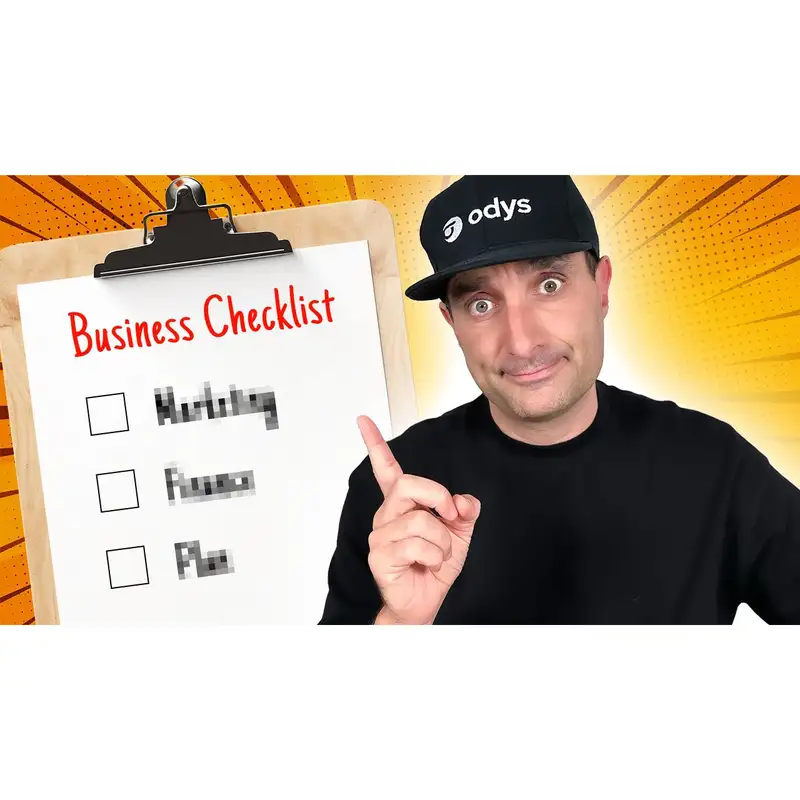
Download MP3Kasra Dash: Welcome back to another YouTube video. Today we are going through a business checklist that should go from A to Z on how you should set everything up in your business. How you should do niche research, how to think of an offer, and how to come up with a marketing strategy as well. I’m joined with James, so let’s get started. Let’s set up a business from start to finish.
James Dooley: The ultimate business checklist. Step number one, before doing anything, is doing your research. Checking who your competition is or will be. Checking to see what your USP is. And how broad you are going to go. Are you going to go very specific on a certain service or product that you are going to sell, or are you going to go quite wide? Can you expand on the research side?
Kasra Dash: What I like to focus on is being niche. Being a specialist in one thing. There are pros and cons to that. For example, let’s say you wanted to set up a marketing agency. Instead of doing marketing for plumbers and lawyers and tradespeople, you might say you are going to do marketing only for dentists.
Kasra Dash: The pros of that are obvious. Your internal staff know you need to use certain colours or specific wording because that attracts people to become a patient at that dental clinic. From a scalability point of view, you have that advantage.
Kasra Dash: The con is if, for example, dentists all got replaced by AI somehow and they never needed marketing again, you would have all your eggs in one basket. So you do need to worry about that. Do not go too niche, but also do not go too broad.
Kasra Dash: What are your thoughts?
James Dooley: I prefer niching down and going very specific. If I want to go slightly broader, I can set up another limited company. I also want to make certain that I build what I call shouldering niches. I become very friendly with people in a niche that is close to mine.
James Dooley: There are times I might cross sell and give them work, and in return they can give me work back.
James Dooley: Step number two, once you know the product, service or industry you are going to enter, is thinking of a name of the business and the name of the brand. What do you normally do when you are thinking of a name?
Kasra Dash: Just go with it. Do not spend too much time. There are so many business owners who say they have a really good idea and then spend six weeks thinking about logo colours and the name. In reality, you can change it further down the line.
Kasra Dash: The sole purpose of running a business is to get money in. If you are pondering what colours to use on your logo or what name to use, you are wasting time. Set it up, get some money in, make some money, then later you can change the name. That is the biggest advice I can give at this stage.
James Dooley: It is funny you used the word “pondering” because that begins with P. The three biggest failures of a business owner all begin with P. That is prioritisation, procrastination and perfection.
James Dooley: Exactly as you just said. Some people ponder on a name for six months. Just think of a name, ask a few friends, get a list of three, choose the one you think is best and move on. Do not procrastinate.
James Dooley: Once you have the name, the next part of step two is buying a domain name. That might be the deciding factor between your last two choices. If the domain is not available, that can rule a name out. You want your domain name to be your company or brand name ideally.
James Dooley: Have you got any ideas about securing a domain name? Which registrar do you use and what do you look at if you are in the UK? Are you looking for a .co.uk or a .com?
Kasra Dash: I always try to get a .com, but you know yourself that .coms feel few and far between now. Everything feels taken. So I try to get a .co.uk if the .com is taken, obviously if you are in the UK. If you are in the States you might go for a .com or a .net.
Kasra Dash: The registrars I typically like to use are IONOS or GoDaddy. They are both pretty solid. One piece of advice is try to purchase the domain for four or five years in one go if you can. Sometimes you purchase the domain for 6 or 10 dollars, but the renewal cost next year might be 20 or 30 dollars. You may as well opt in for a few years and save some money.
James Dooley: For me, the big one is that the majority of my work is in the UK. If I know I am only going to stay in the UK, I prefer a .co.uk. Also, the .uk top level domain is out and there are plenty of decent domains now available on .uk.
James Dooley: If you are going to be buying lots of domains in the UK, I strongly recommend signing up to Nominet, which means you can get your domains a little bit cheaper. That is only if you are in the marketing sector and going to build lots of different domains.
James Dooley: Next part. You have done your research, you have your company name, you have bought the domain name. The next step is writing a business plan. A business plan, with a vision statement, should be there so you understand where the business needs to be heading.
James Dooley: What I like about a business plan is that sometimes, a year or two down the line, I think to myself, “Should I do X, Y, Z?” It is good to come back to what my core focus needs to be. I check the business plan, which can evolve and change, and see if it is in line with my vision statement.
James Dooley: Have you got anything else to add about drawing up a business plan?
Kasra Dash: I think with everything in this list, people need to remember we are not trying to be perfect or act like we are flawless. I will openly admit I have never written a formal business plan.
Kasra Dash: What I like to do instead is write goals. I will say, “I want to hit this amount of revenue in six months,” or “this net profit in twelve months,” or “I want to have X amount of staff,” or “I want to serve this number of clients by November 2025.” I do it differently, but that is not to say you should or should not. You are probably a bit more experienced on this one.
James Dooley: I think a business plan is very important, especially when we go on to the next part. If you are trying to draw up finance, you need a business plan. Some business bank accounts, if you want finance, will want to see your business plan. They want to see your vision, where you are going to take it, how much you need to lend, and whether the business is viable.
James Dooley: If you were going on something like Dragon’s Den and you did not have any kind of business plan, they would not touch you. From the business plan you can start working out how long it will be before you move into profit on your profit and loss sheet. They might know that for the first three years the business will be reinvesting money for growth. That sets realistic goals and expectations.
James Dooley: Would you say the business plan is more important if you are going down the funding route?
Kasra Dash: Yes, one hundred percent.
James Dooley: The next part is finance. Setting realistic goals. The amount of times we get asked, “I have £500 to spend and I am looking to set up a new business, how can I rank this website and grow it?” The answer is you do not have enough money.
James Dooley: You need to build out good quality content, topical authority and backlinks. That is just for a website. If you then want staff and offices, you need to set realistic goals for how much the first 12 months will cost. If you need staff, VAs, insurances, you need to know what you need and have a buffer. Finance is very important.
James Dooley: You could raise capital from venture capitalists, angel investors, or from the bank through grants and funding. Or you might have saved up your own money. Have you got anything else to add on the finance front?
Kasra Dash: No.
James Dooley: Next one is defining whether you are going to be a sole owner, owning 100% of the business, or partnering with someone. I am a massive advocate of partnering up. I want my business partner to push and elevate me.
James Dooley: I want my business partner to be strong where I am weak, so we compensate for each other. Your weaknesses are my strengths and vice versa. I want to do 60% of the work and I want you thinking you want to do 60% of the work. That way we push each other to keep elevating and growing.
James Dooley: A lot of people choose the wrong business partners, so I can understand why certain people prefer sole ownership and want to own 100%. What are your thoughts on directorship and ownership?
Kasra Dash: I think you have put it well. You want to partner with someone whose strengths match your weaknesses.
Kasra Dash: Prime example. When we met five years ago, you were pretty bad at technical SEO and I was pretty good. Now we are both better, but back then that was the split. On the other side, I was really bad at business and you were really good. It was a good harmony.
Kasra Dash: We have both learned a lot. We have seen people partner up where they are both really good at operating a business, but both terrible at marketing. They do not know how to market themselves. That leads to a bad relationship and a bad business.
Kasra Dash: If you are really good at operating a team and making certain staff are paid and have work, and you have a friend who is really good at running Facebook ads, that is a strong partnership. Something like that helps a lot.
James Dooley: Next one is whether you form a limited company, or in the US it could be an LLC. How are you going to set that up? Are you going to set it up in the UK, in the US, in the country you live in, or look at tax haven countries like Dubai?
James Dooley: They all have strengths and weaknesses. You need to speak to your accountant. We definitely cannot offer financial advice. Your accountant will help you decide what they think is best.
James Dooley: For me, I am in the UK and I set up a limited company every time for every business or brand. I want to make sure there is no domino effect. If one business struggles, I do not want every business to suffer. Each business is its own limited company and I have a holding company that owns each one. That is how I set mine up. Before that, as part of a business checklist, you need to know where you are going to incorporate.
James Dooley: Anything to add on forming and defining the business structure?
Kasra Dash: This is not financial advice, but you want to make sure from the start that your structure matches your long term plans. If you are planning to sell the company, say you set up an agency and want to sell it in four years, that is part of your business plan. You probably want to speak to an accountant and figure out the best structure from day one.
Kasra Dash: For example, a lot of people set up in Dubai in tax free zones because they know they are going to sell their agency or portfolio in five or six years. I would suggest speaking to an accountant and letting them guide you.
Kasra Dash: It also depends on whether you want to sell or hold. We might not want to sell certain things. You might want to sell in two years. Your situation will be different to ours.
James Dooley: The next one, and this is a big one, is payment gateways and bank accounts that you open.
James Dooley: We are very close friends with lots of business owners and we see this problem a lot. I will give one example, then you can expand and we can go through different payment gateways.
James Dooley: PayPal. When you start getting a lot of money paid in, PayPal can freeze your money, especially if you start getting some refunds. Do not have a lot of money tied up in your PayPal account. We have seen people have money frozen for six months before they can get it back.
James Dooley: So if you have a hefty amount of cash flow sat in your business PayPal account, I strongly recommend moving some of that out. What else is there? Obviously things like Wise and Revolut. How do you pay people abroad?
Kasra Dash: There is PayPal, Revolut in the UK, and I believe they are in the US now, and there is Wise. I have not had issues with PayPal yet, touch wood.
Kasra Dash: I strongly advise splitting your payments across all three if you can. Get some payments into your physical business bank account, some into your PayPal, and some into your Wise. Then at least you are spreading risk.
Kasra Dash: We know people with £100,000 stuck in PayPal who need to pay staff the next day and it is frozen for six months. Definitely do not keep it all in PayPal.
James Dooley: Two others which are good banking apps are Starling and Tide. They are good for business banking.
James Dooley: For payments in, I strongly recommend Stripe if you are setting up an e-commerce store. When you are choosing what website you want for e-commerce, which we will come to in a minute, you will choose between things like WooCommerce or Shopify and then you will choose your payment gateway, like Stripe.
James Dooley: There are different payment gateways and different rules. For example, if you are in a grey area, like raffles or gambling or prize competitions, you will need a different payment gateway.
Kasra Dash: Yes. Stripe is great as long as you are “clean”. If you are installing solar panels and taking payments of £3,000 or £4,000, that is fine. If you are doing gambling or competitions, you need a processor that accepts those industries.
James Dooley: Moving on to the bit we both like the most. Marketing.
James Dooley: If you are a trade, in my opinion, a successful business needs a consistent flow of quality inquiries. A lot of businesses have the best product or service in the world, but if you are not getting a consistent flow of quality inquiries every day, you will struggle. You will be forced to do jobs at cheap prices.
James Dooley: When you are getting lots of inquiries, you can start upping your prices and indirectly make more profit. There are other marketing routes for e-commerce stores and online businesses.
James Dooley: Building a brand and creating a website is key. From my point of view, I really like WordPress. That is a CMS which allows you and many staff members to log in. It is easy to edit and to use.
James Dooley: For e-commerce, which do you prefer?
Kasra Dash: The main two are WordPress with WooCommerce and Shopify. Then you have others like BigCommerce, and even Wix now does e-commerce.
Kasra Dash: If it is down to me, I would probably use Shopify. You pay something like £25 or £30 a month. It is plug and play. Marketing agencies have a lot of experience with it. So probably Shopify first, then WooCommerce, then the rest.
James Dooley: When we look holistically at marketing, it is not just digital marketing. You have different forms. You have radio ads, TV ads, billboard advertising, bus stop ads, train ads, underground ads if you are in London. There are lots of traditional methods.
James Dooley: Online, are there only one or two options, or plenty?
Kasra Dash: There are loads. You have Bing ads. You have SEO, which is ranking your website in Google for keywords people search for. You have PPC, which is Google’s paid side for the top three spots.
Kasra Dash: You have Google Business Profile, so if you are a local business you can show up for “accountants near me” in the map pack with your reviews. You have Facebook ads, Twitter ads, Pinterest ads, Reddit ads, YouTube ads. YouTube is the second biggest search engine. There are a lot of digital avenues, same as with traditional.
James Dooley: Another big one people do not talk enough about is email marketing. That is very important when you are building your funnels. Once you start to build traffic through whichever channel suits your industry, you want to capture email addresses and nurture people through a process. Warming them up before they buy is important.
James Dooley: Personally, if I am setting up a business from day one, I would make sure I have enough money to hire a fractional CMO. Can you explain what a fractional CMO actually is?
Kasra Dash: First we need to understand what a CMO is. That is a Chief Marketing Officer. Their job is to look at your marketing outgoings.
Kasra Dash: For example, you might have had your business for 10 years and be advertising on billboards, doing TV ads and doing SEO. Let’s say on billboards you are paying £10,000 a month, but not seeing a clear ROI. From a holistic view you think everything is fine, so you keep spending.
Kasra Dash: If you remove that £10,000 and allocate it to SEO or PPC, you might be able to double or triple your revenue. That is the job of a CMO. They look at your marketing spend and say, “Why are we spending that £10,000 on billboards with no return?”
Kasra Dash: A fractional CMO is someone you hire part time. It might be a strategy call every month or every week, depending on the setup. They look at your marketing expense, dig into the numbers and say, “We are spending £100,000 a year on advertising. If we spend that £100,000 in the correct places, we could triple revenue.” That is what a CMO or fractional CMO does.
James Dooley: The main benefit of hiring a fractional CMO is cost. A full CMO is very expensive. You are looking at a wage of at least £100,000 a year.
James Dooley: They need to be strong in all areas of marketing, not just SEO. SEO is a minefield. PPC is a minefield. Social media management is a minefield. Then you have traditional marketing.
James Dooley: A fractional CMO, in my opinion, is often better than a full time CMO. The “fractional” part means they spend a fraction of their time on your company, but they also work for other companies. As they see and test things in different industries, they are consistently innovating and improving their own knowledge.
James Dooley: A fractional CMO can save you a fortune or get you to spend more in areas that will give a return on investment. That part time role can help you spend money in the correct places.
James Dooley: Little things like retargeting pixels. Many people who do SEO get a lot of traffic to the site but do not set up their retargeting pixel. Retargeting on Facebook and Instagram is one of the cheapest forms of advertising. It cookies the visitor and brings them back to the website for a very low cost.
James Dooley: A CMO will quickly understand that and make sure those quick wins are in place. They will make sure the thank you page is set up. They will make sure leads are added into a CRM system so they can be nurtured.
James Dooley: Anything else to add on that?
Kasra Dash: There are a few other bits a CMO or fractional CMO will guide you on. For example, every January there is a show in Barcelona called CES.
Kasra Dash: You typically find that big tech companies like Samsung or Apple start spending less in Q4 because they know they are going to CES in January. Instead of marketing everywhere in Q4, they hold back cash because they need to send 200 staff to CES.
Kasra Dash: A fractional CMO would guide you on that kind of strategic planning, as well as targeting and tracking. If you are feeling lost with tracking and where to spend your money, I recommend hiring a fractional CMO.
James Dooley: The last couple of things are getting yourself a decent accountant and understanding your numbers. Once you start getting your marketing right and making good profit, you want to make sure your accountant is doing proper tax planning, so you are not overpaying on tax.
James Dooley: You want your profit and loss sheet set up correctly, all expenses in, and all your accounts feeding into one dashboard, like Xero. That makes it easy to know your profit and loss.
James Dooley: There are other very important metrics. The average transactional value of customers and how you can increase it. And the lifetime value of a customer, which is crucial. You need to know these metrics to understand how much you can spend to acquire a new customer.
James Dooley: LTV, lifetime value, is very important.
James Dooley: That is the checklist I have here for setting up a business. There is more we could expand on, like sales funnels, but is there anything else you would add?
Kasra Dash: I have three. We touched on two, but they are important. First, you need to know your numbers. You should figure out how much it costs to acquire a customer and how you can increase LTV. If you increase lifetime value from £500 to £1,000, you have doubled your revenue without doubling customer count.
Kasra Dash: Second, hiring and retaining staff. We have not touched much on that.
Kasra Dash: What would you say you look for when hiring staff?
James Dooley: One of the best bits of advice when you are growing is hire fast and fire faster. Some people say hire slow and fire fast. I would say hire fast and fire faster.
James Dooley: Business is about speed and innovation. If you do not innovate, you evaporate. You have to make sure you are getting the right people through the door.
James Dooley: Always put them on a probation period for a few months. Anyone can look good on a CV. Anyone can say what you want to hear in an interview. What they cannot do is keep the lies going for weeks.
James Dooley: You start to see after the first, second and third week who they really are. Do they still have the energy level they showed in the interview?
James Dooley: For retaining staff, culture is key. You have to look after your staff. We have flexible time instead of strict 9 till 5. You can do 8 till 4 or 7 till 3. That is important for people, for example parents who want to do school runs.
James Dooley: You have to work with staff to make sure they are happy. Once you get bigger, you want a cultural architect in the company. Someone who makes sure everyone is okay, someone staff can go to if they have complaints.
James Dooley: We have a suggestion or complaint box where people can say things like, “I really want a fruit bowl,” or other small improvements. Those things help retain staff. Retaining staff is very important.
James Dooley: On top of that, you must set up the right systems and processes. Make sure you have SOPs, standard operating procedures, which means if staff leave, new staff can come in and have step by step guides for every task.
James Dooley: It is important to build your business to be systems dependent, not people dependent. There is a classic book called “The E Myth Revisited”. I strongly recommend reading that. It is a great business mindset book.
James Dooley: Systems and processes maintain quality, and at that point you can start looking at virtual assistants. VAs in the Philippines, South Africa, Bangladesh, Venezuela, India. We have virtual assistants in all those countries.
James Dooley: It allows us to charge Western rates and get the work done to a high quality standard in third world countries.
Kasra Dash: Sounds good.
Kasra Dash: That has been the business checklist. We are also going to have a video live in the next couple of days talking about different traffic sources you can use to grow your online presence and create a consistent flow of inquiries.
Kasra Dash: We will do an A to Z tier list for that. That has been the video so far. Thanks for joining me.
James Dooley: Cheers Kasra, thanks.
Creators and Guests